
Artist
Origa
2 songs
Biography
Origa was the stage name of Olga Vitalevna Yakovleva, a Russian singer and composer who worked mostly in Japan and became known for a career that moved from healing music to electronica and anime soundtracks. Born in Kochenёvo, Novosibirsk, Russia, she began music studies at age 5 and, by 11, was invited to appear on a children's TV program to perform a song she had written. Her training in voice and composition never stopped, and during her studies at the Novosibirsk Musical College from 1986 to 1990 she took part in themed festivals and competitions that refined her style as a stage performer.
In December 1990, Origa traveled to Japan on a three-month personal invitation and appeared at several festivals in Sapporo, where she represented Russian culture. Around the same time, she signed a contract with ROAD & SKY Company and later moved to Tokyo in May 1994 to record her first album and continue her career as a singer and composer. That contract remained valid until her death on January 17, 2015.
During her first period in Japan, she recorded four full albums, two mini albums, and later a Selected Songs album through Toshiba EMI Records between 1994 and 1999. Her album EIEN (Eternity) became the first Russian-language album to appear on the Japanese Oricon chart, reaching No. 64. The song Polyushko-Pole from that release was used as the theme song for the TBS television series Ao no Jidai (Blue Era). She also collaborated as a backing-vocals producer with leading Japanese pop artists, worked on radio and television commercials, including on NHK, and performed in live concerts.
After a long maternity leave, Origa returned in 2003 with several main theme songs for Stand Alone Complex O.S.T alongside Yoko Kanno, a project that significantly expanded her popularity among anime fans. In that period she shifted her sound toward electronica and began producing her own material independently, releasing the GEMMATIKA Records albums Era of Queens and Aurora, as well as the remake album The Songwreath. Her move into anime music helped define her as one of the notable Russian voices in Japanese pop culture.
From 2008 onward, Origa was invited by guitarist SUGIZO to work as lead singer in his project, appearing in several concerts and an overseas tour. Before her death, she also sang on Starry Tales for the World Digital Planetariums, a project created with synthesizer player Himekami and artist Kagaya, and in 2012 she recorded three soundtracks for the video game Final Fantasy XIII-2. Her career linked Russian vocal performance, Japanese pop production, and anime music in a way that made her a distinctive and influential artist.
Songs
2 songs
Origa has 2 anime songs: 2 openings. The most played are (Koukaku Kidoutai) and (Koukaku Kidoutai).
Type:
Sort by:
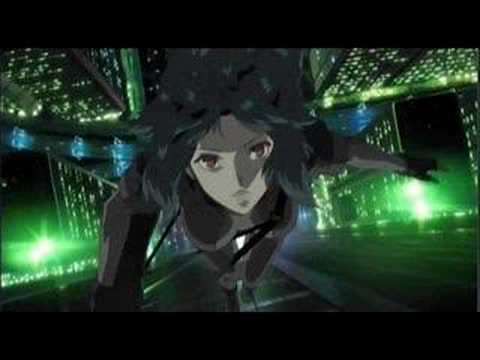
Inner Universe
Koukaku Kidoutai
Origa

Rise
Koukaku Kidoutai
Origa