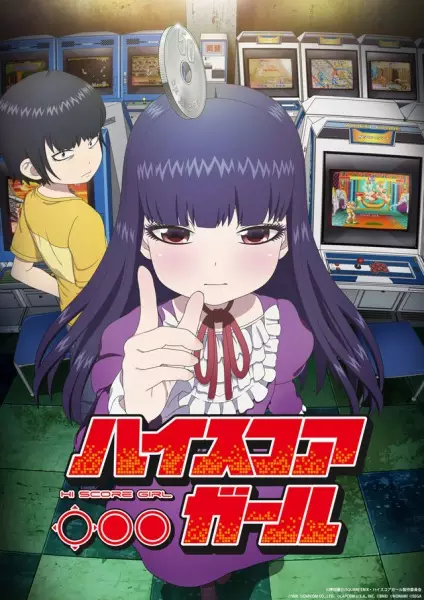
In Hi Score Girl, the year is 1991, when arcade video games are the latest craze and the idea of becoming a professional gamer still feels like a distant dream in an industry that has not yet spread its influence. Sixth-grader Haruo Yaguchi has built his confidence, pride, and reputation in local arcades around his skill at the controls, and he is used to standing above the competition. That certainty collapses when his classmate Akira Oono, a rich, pretty, and smart girl who seems as close as can be to perfect, defeats him effortlessly in Street Fighter II.
For Haruo, Akira is more than a rival. He has never cared much about her wealth, appearance, or academic talent, but he cannot ignore what her victory means: someone has finally appeared who can challenge his self-proclaimed supremacy in video games. Part of him resents being outplayed by a classmate he once dismissed, while another part is thrilled to meet an opponent who can push him to fight harder. Against the glow of the arcade cabinets, their rivalry becomes a story of ego, competition, and the strange pull between two students who first measure each other through the games they play.
As the story moves through the 1990s, the arcades become more than a battleground for scores: they become the place where pride is tested, personalities collide, and an unexpected connection begins to form between Haruo and Akira. Koharu Hidaka enters that dynamic from school, adding another competitor to a relationship already shaped by rivalry, friendship, and romance. Framed by the fighting-game boom of the era, the franchise follows its characters as they grow up alongside the medium that defines them.